The Coral Reef
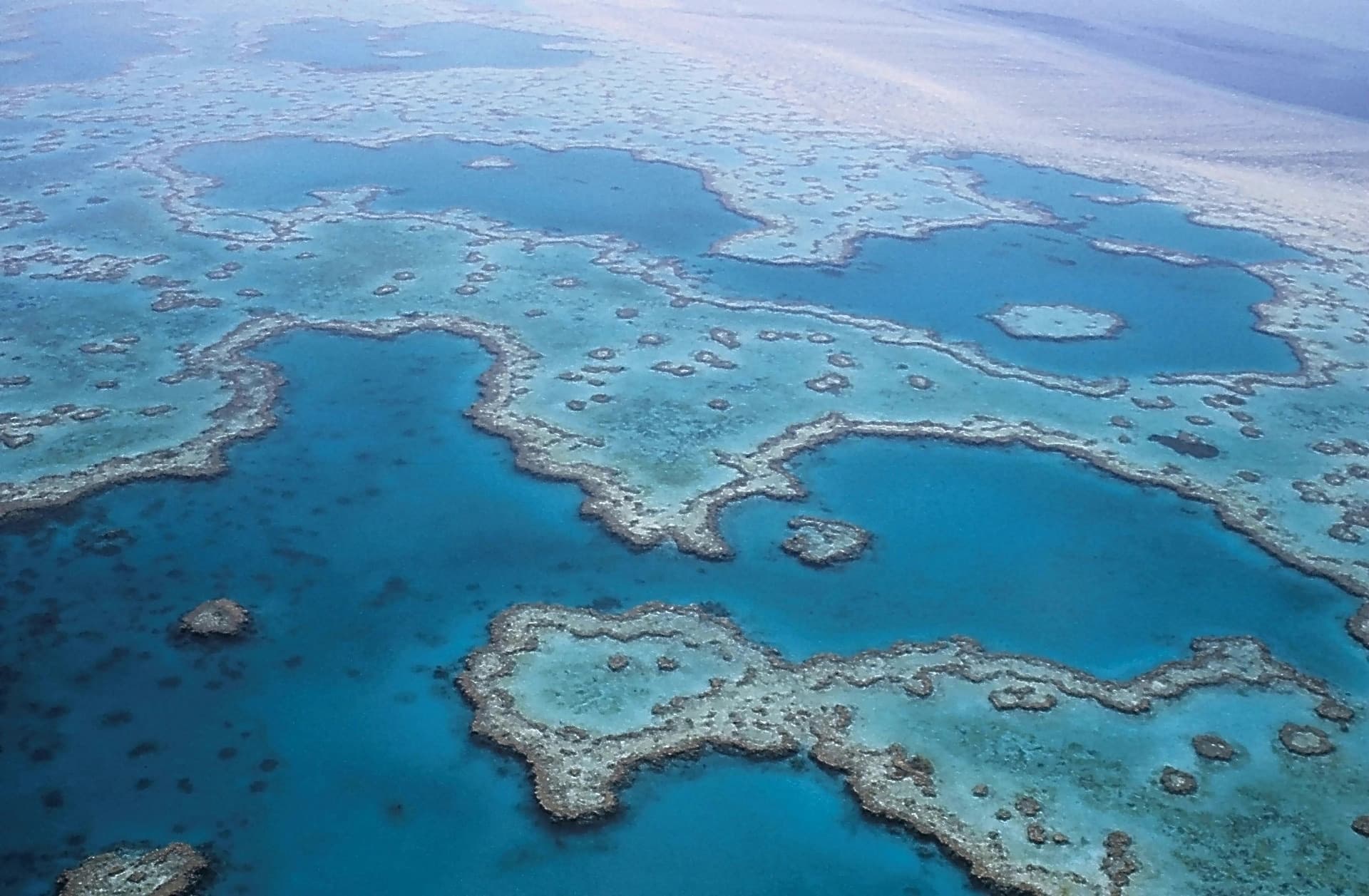
It is on the east coast of Australia, all along Queensland, that the largest coral reef in the world is found.
To try to take the measure of the Great Barrier Reef. It is the only living organism to be visible from space, home to more than 400 species of coral, 1500 species of tropical fish, 200 species of birds, and several species of dolphins, turtles, rays, whales and sea snakes.
A sumptuous panel of biodiversity that is a visual delight. But, with the continuous rise in temperatures, the corals have gone from poor to very poor condition.
The Great Barrier Reef Marine Park Authority publishes a report every 5 years on the state of the Australian Barrier Reef. And this year, even more than the previous ones, the state of the famous ecosystem has not stopped getting worse, notably because of climate change.
Doctor David Wachemfeld, the park’s chief scientist, sets out the 4 major causes of this degradation: climate change, run-off from the land, the development of the coast, certain forms of fishing, notably illegal fishing, as well as pollution.
The corals have undergone severe bleaching events due to the rise in ocean temperatures. Climate change is the first cause of this bleaching, because it notably alters the abundance of the corals as well as the species that make up the coral environment. Following these two consecutive bleachings, scientists have declared the death of more than 100 corals, as well as 30% of deep-water corals.
The land-based impact is mainly due to agricultural run-off, which has favoured the establishment of the crown-of-thorns starfish, a starfish that devours the corals and whose presence increases in correlation with pollution. Obviously, coral bleaching is not the only consequence of climate disruption.
Coral bleaching hampers symbiotic restoration. Symbiotic restoration is the relationship between the coral and an alga it contains, an alga that is supposed to renew itself.
But the alga no longer renews itself because of the rise in temperatures. A non-renewal that undeniably leads to the death of the coral, which is a disaster for our whole ecosystem.
BIOMIMICRY
Engineers have taken inspiration from the formation of marine organisms such as coral reefs to create carbon-neutral cement.
They discovered that coral polyps, living creatures belonging to the class of the Cnidarians, absorb minerals and CO2, then secrete calcium carbonate in order to form their hard outer structure. On the basis of this process, he developed new methods of producing carbon-neutral cement. The scientist managed to capture the CO2, to dissolve it in seawater and thus to create carbonate. The components of this hard material turned out to be extremely suitable for making durable materials for construction.
In time, this material could replace cement, which would of course considerably reduce the impact of the construction industry on the environment, traditional cement being one of the most polluting materials.