A world without Rhinos
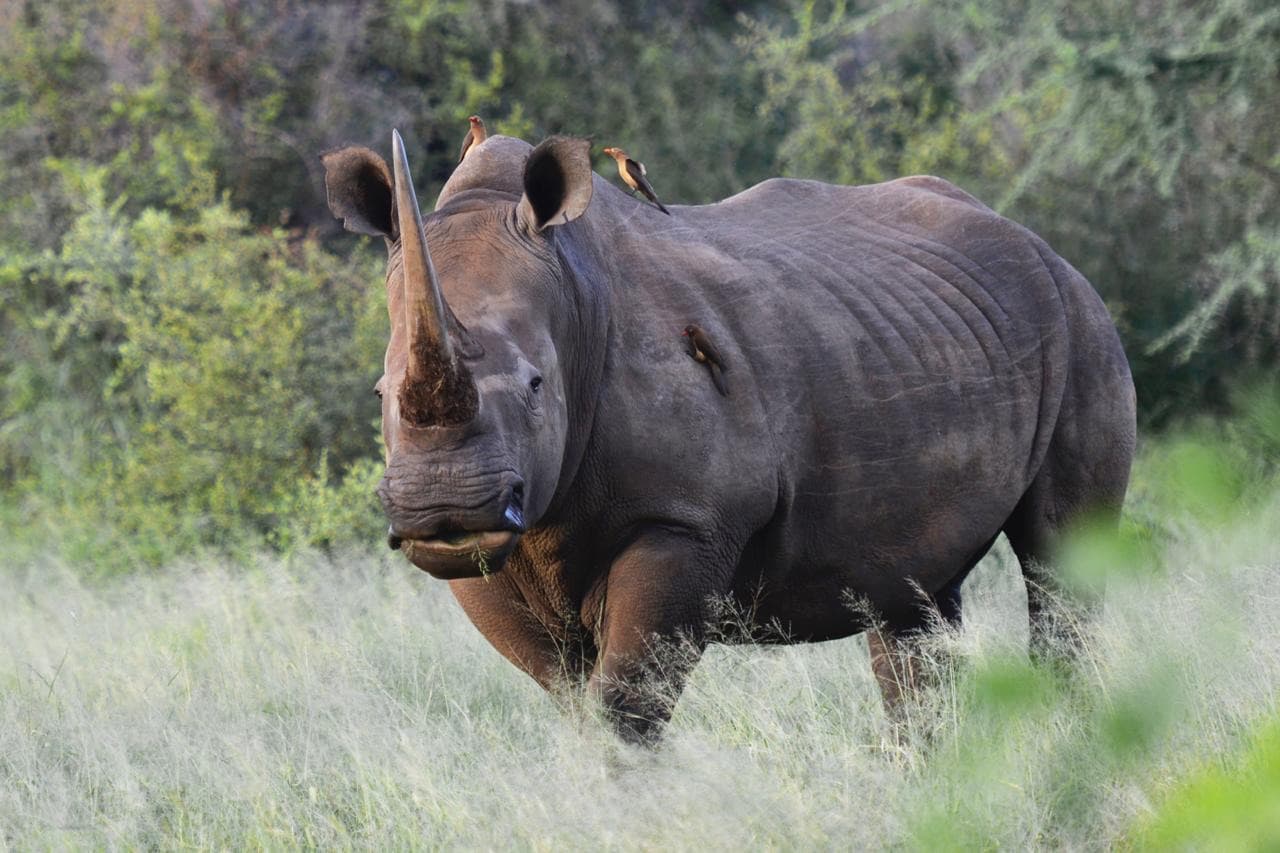
The rhinoceros is one of the largest land mammals, able to measure up to 4m in length and 2m in height and to come close to 2 tonnes, it can run up to 40km/h when it charges. It lives on average between 40 and 50 years and, as for the females, they have almost deliberately only one gestation on average every 5 years so that they can look after their calf.
It is found in Africa and in Asia, where it has almost disappeared in the wild, only a few thousand remain at present.
The rhinoceros normally lives alone but in the savannah small groups can sometimes be seen. They are territorial animals but the white rhino is much more laid-back and social.
Rhinos are often accompanied by oxpecker birds that perch on their skin and clean off the parasites. In fairly rare cases, young rhinos can be prey for big cats such as the lion. Adult rhinos, on the other hand, have no enemy other than man.
Most of the time the rhinoceros threatens its opponent but does not actually fight it.
Mud is essential to cool them down, to protect them from insects and to protect their skin from the sun. When thick, it also serves as armour during the fights that break out over dominance.
The black rhinoceros, whose upper lip is hooked, feeds on leaves and other scrub; the white rhinoceros, which has a wide mouth with square lips, grazes on grass.
The rhinoceros horn grows about 7 cm a year. It grows back like a fingernail. The largest horn known measured 1,58 m.
Raised towards the sky, the horn is a great protection and a symbol of power.
In some cultures, especially in China and in Vietnam, rhinos are coveted the supposed therapeutic and aphrodisiac effects attributed to the ground horn or as a mark of standing and a symbol of virility, these cults have encouraged their trafficking on the black market, where a horn is worth nearly 200 000€ or 70 000€ per kilo. The poaching of species that are nevertheless endangered is constantly increasing, as are the prices of this trade, never so high. Tests carried out in the laboratory have found none of the supposed virtues: “Medically it is like biting your nails” It is pure keratin.
The situation is dramatic, the Rhinoceros population in the world was 500 000 individuals in 1990 and only a few thousand remain at present. We avoid counting them so as to avoid them being located, and we are unfortunately obliged to cut off their horns to stop them being killed.
Associations are fighting actively in the field to protect the animals and risk their lives every day. It is imperative to support them in their protection work, which is most of the time voluntary.
We are losing on average 2 rhinos a day! This species cannot survive such a mortality rate. In 10 years, the largest rhinoceros population has declined by 70%. The situation is critical!
Join the Army of Nature mission ⚡⚡⚡