Araneae Malicia
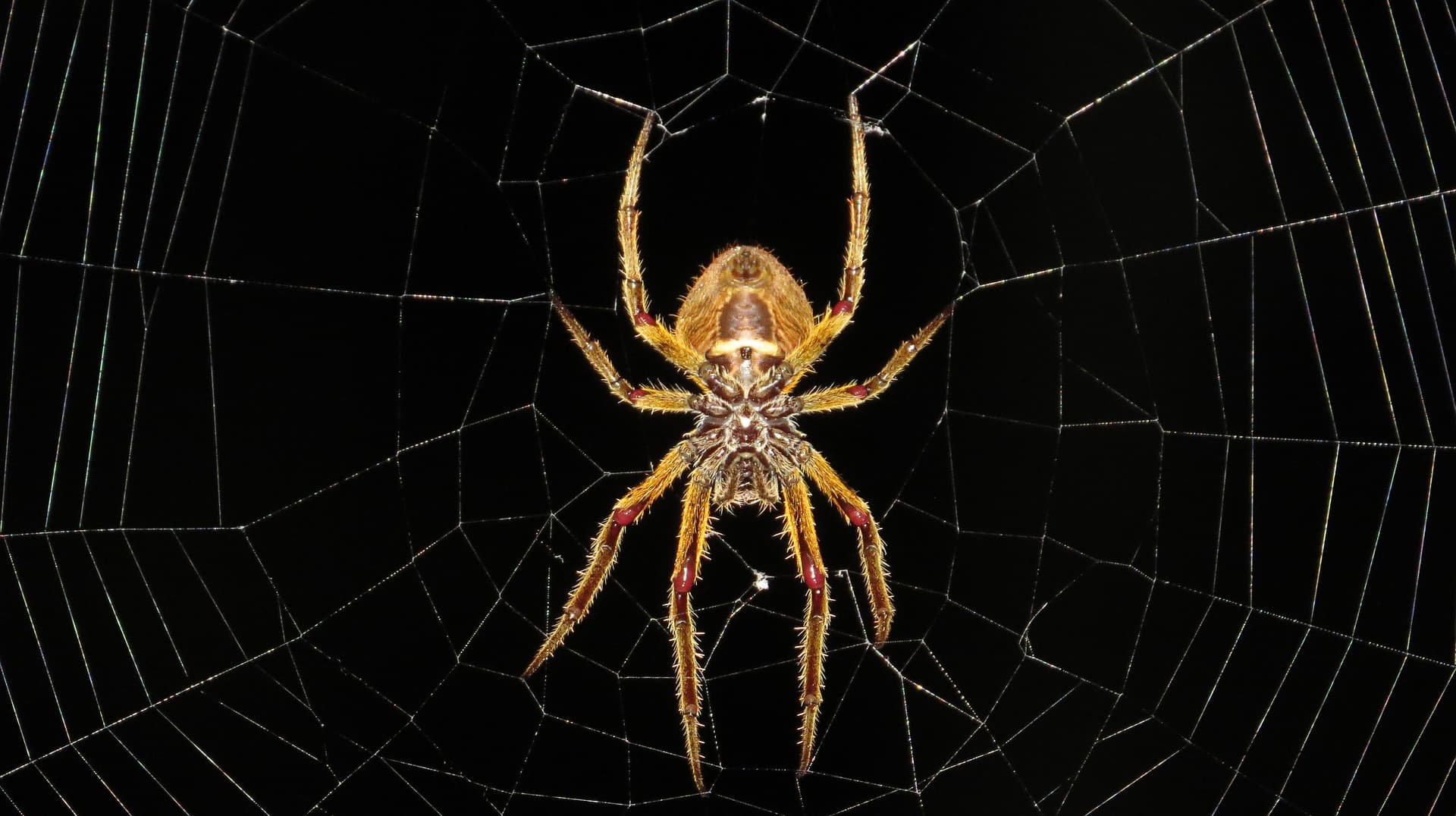
Spiders, of the class Arachnida, are invertebrate arthropod predators. Their body is divided in two, the cephalothorax (the front part, without mandibles or antennae, fitted with eight legs) and the abdomen, which carries spinnerets at the rear. Through these appendages they secrete silk, which is used to produce the thread that allows them to move about, to weave their web or cocoons trapping their prey or protecting their eggs, and even to make a temporary store of sperm or a dome allowing them to store air under fresh water.
Unlike insects, they have neither wings, nor antennae, nor chewing parts in the mouth. They generally have 6 to 8 eyes, which can be simple or multiple.
The order Araneae is very homogeneous from a morphological and anatomical point of view, but of extremely varied biology, both in the various uses of silk and in the forms of behaviour during predation or reproduction. As predators, spiders play a major role in regulating insect populations, and they are themselves regulated by predators that are often specific (reptiles, birds or insects). They have adapted to almost every environment, from caves to mountains, from Arctic to equatorial environments. Only salt water, very high altitudes and very cold environments have not been colonised by the Araneae.
Spiders can inject a venom to protect themselves or to paralyse their prey, liquefying their internal organs by means of enzymes. Bites from large species are often painful, but leave no after-effects. Only 200 known species inflict bites capable of affecting the health of Man.
Spiders and insects play an important role in the mythology and religion of the Hopi Indians. They often appear in rock art, on wall paintings and on ceremonial objects. They are also very present in myths and stories, where they play the roles of heroes or villains. Spiders are indeed conceived of as beneficial creatures carrying life in founding myths or as evil helpers in witchcraft.
The spider has symbolised patience and persistence, because of its hunting techniques. It is also a symbol of deceit and malice because of its toxic venom and the slow death it causes, which was often interpreted as a curse.
BIOMIMICRY
The webs made to capture prey have remarkable assets of solidity and elasticity:
They are very light (a web that went all the way round the Earth would weigh only 320 grams).
They have a very great capacity to absorb shocks.
They can stretch by 40% before breaking.
To break a spider's web takes ten times more energy than any other similar biological material.
By comparison spider silk is 4 x stronger than kevlar (a very strong resin used in the form of fibres in certain composite materials such as the bulletproof vest) and 60 times stronger than steel.
Scientists have discovered what made the spider's silk thread very strong and very supple: two proteins, first fibroin at 63.5% and second sericin at 22.5%.
The rest of the silk is quite simply made up of fats, minerals and water.
The spider...From another point of view by Vegavision 🕷