Plastic hell
Today, around 99% of the plastic produced is obtained from petroleum, natural gas and coal - fossil fuels. The production of plastic is a 4-step process that begins with the extraction of the raw material, fossil fuel in this case, which is then refined to obtain different by-products. The most widely used by-products for plastic production are methane, ethane, propane, butane and Nafta.
Additives are important because each of them is used to give the plastic optimal targeted properties such as toughness, flexibility, elasticity, color; or to make them safer and more hygienic for particular applications and use.
The versatility of the material is what made it widely used in many industries, from automotive to packaging and textiles. Since 1950, when the annual production of plastic was around 1.5 million tonnes, the industry has grown disproportionately to reach an annual output of over 350 million tonnes.
The glorious rise and growth in the use of plastic over the past 70 years has now become a global threat to the environment that will no doubt be addressed by whoever created it. The magical material that made products cheaper and more accessible, food last longer and easier to move, has also fueled a single-use culture in which the actual 'working time' of this plastic product is between seconds and minutes. This is what happens, for example, with plastic packaging; which in 2015 generated 141 million tonnes of waste (out of 146 million tonnes) and which represents 39% of all plastic production and around 50% of plastic waste.
The reach of plastic simply has no limits. The same goes for its negative effects. For several reasons, such as the mismanagement of plastic waste around the world and the direct discharge into the environment - known as trash - plastic can be found almost everywhere today.
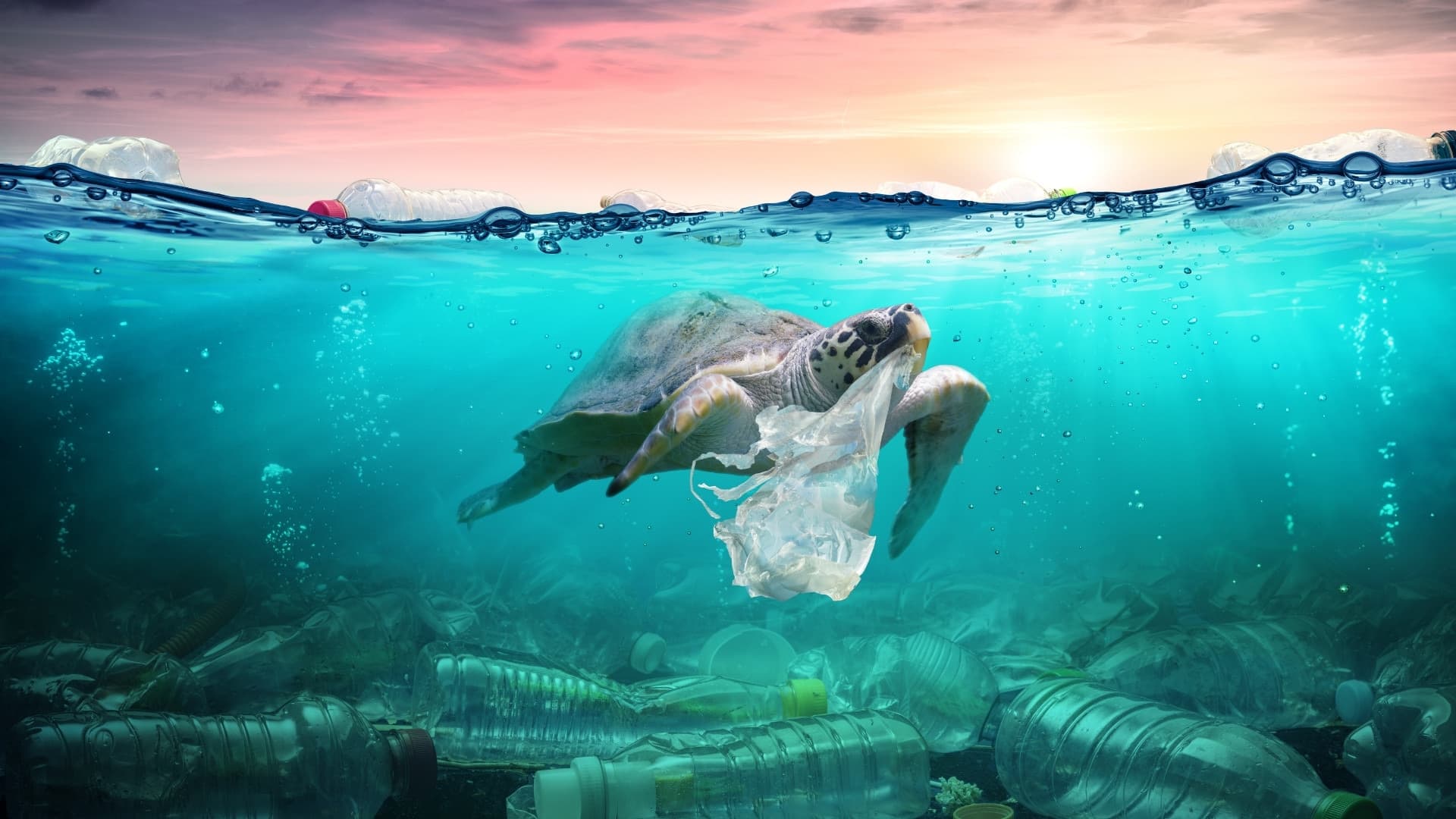
What's more, every year about 8 million tonnes of plastic leaks into our oceans, plastic that gets where humans don't. We have estimated that there are now around 270 million tonnes of plastic in our oceans, with 5 trillion pieces of plastic on the surface and a total of 51 trillion microplastics (plastic pieces smaller than 5 mm).
This plastic tide is recognized as one of the greatest threats our oceans face for many reasons. Plastic pollution can kill marine mammals directly by becoming entangled in objects such as fishing gear, but also by ingestion, mistaking them for food. In 2018, microplastics had been found in the organs of more than 114 aquatic species, including some species found only in the deepest ocean trenches.
Plastic pollution also has devastating effects on land. Indeed, in addition to being eaten by animals, when it is piled up in landfills or littered in the environment, it releases toxic compounds that contaminate the soil and groundwater or it can cause flooding by clogging drainage systems.
It is an unprecedented ecological disaster to which we have not yet found a concrete solution but which is dramatically impacting the biosphere.
The time is urgent and we can no longer ignore it.
Army of Nature ⚡⚡⚡